How a digital implant workflow connects the clinic and dental lab
Digital imaging, scan files and laboratory handoffs serve different roles. Ye-on Dental Hospital’s public description offers a starting point for understanding how those pieces fit together.
What Ye-on describes
Ye-on Dental Hospital’s Geomdan branch describes guided implant care and an in-house dental laboratory on its official introduction page. Those are two separate parts of a workflow: a planning process that informs the procedure and a laboratory process that helps turn clinical information into a restoration. The details of an individual case belong in the consultation.
How the information moves
A dental team can collect surface information using an intraoral scan and, when clinically indicated, use cone-beam CT to assess structures beneath the surface. A plan can bring those inputs together. Each handoff should identify the correct record, the approved version of the plan, and the team member responsible for reviewing it.
What the dental lab needs
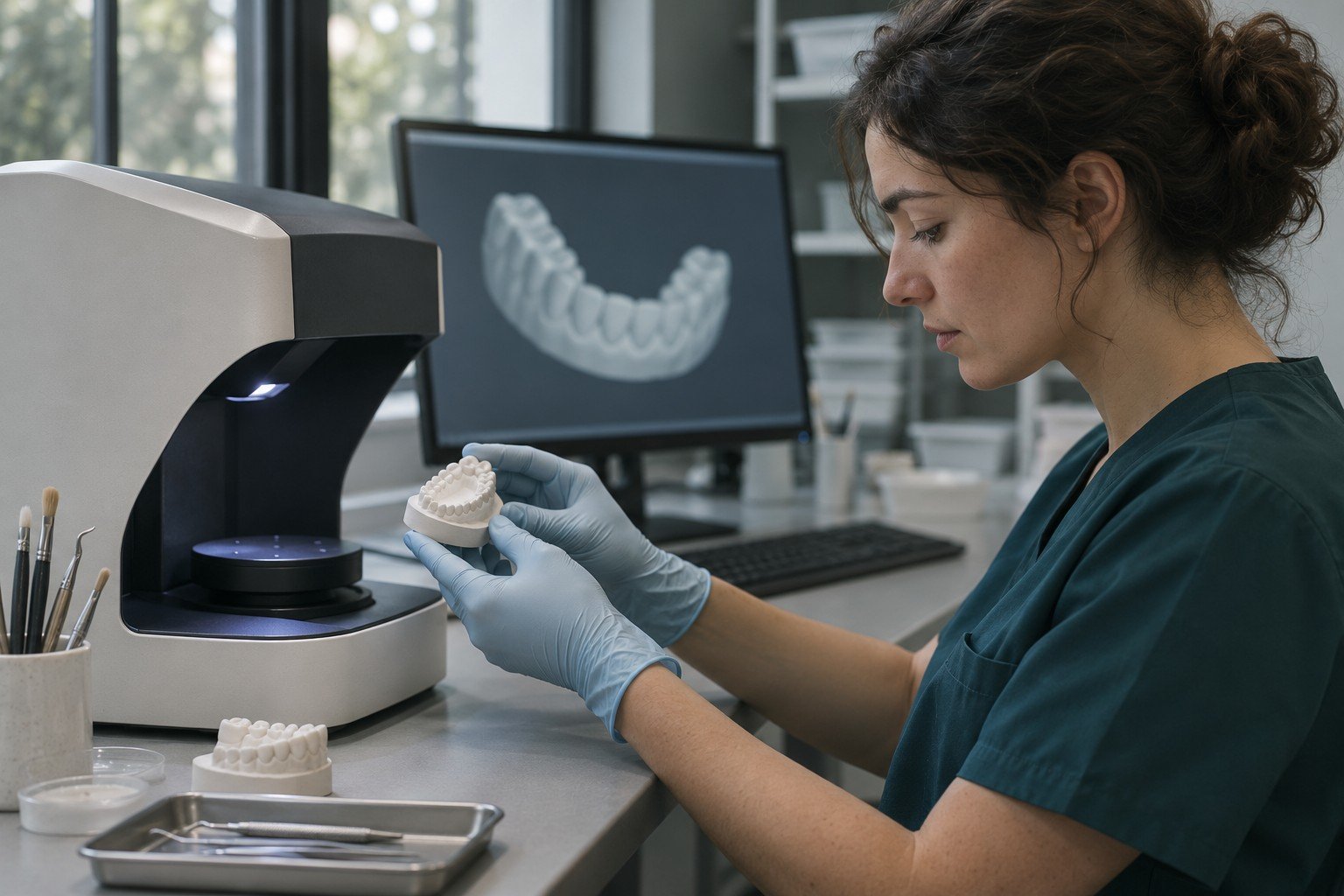
A useful laboratory handoff records the prescription, relevant scan files, the intended restoration and any adjustments agreed with the clinician. When a plan changes, the clinic and lab should be able to identify which files are current and which decisions still require approval.
Questions to ask at a consultation
Ask what information the team expects to collect, who reviews the plan, and whether the restoration is made on site or sent to a partner lab. Ask how changes or fit adjustments would be handled. A digital workflow can make these steps easier to trace, while the dental team remains responsible for deciding what is appropriate for the patient.
Sources
Ye-on Dental Hospital, Geomdan — About the hospital
American Dental Association — Digital Dentistry and Technology